New Supply
From Accidental Landlords
Is Cooling Rent Growth
A notable shift is underway in the U.S. housing market: the rapid rise of so-called “accidental landlords” is helping to moderate rent growth after years of sharp increases. These are homeowners who, unable or unwilling to sell in today’s market, are instead converting their properties into rentals—often temporarily. The result is a meaningful increase in supply that is reshaping rental dynamics nationwide.
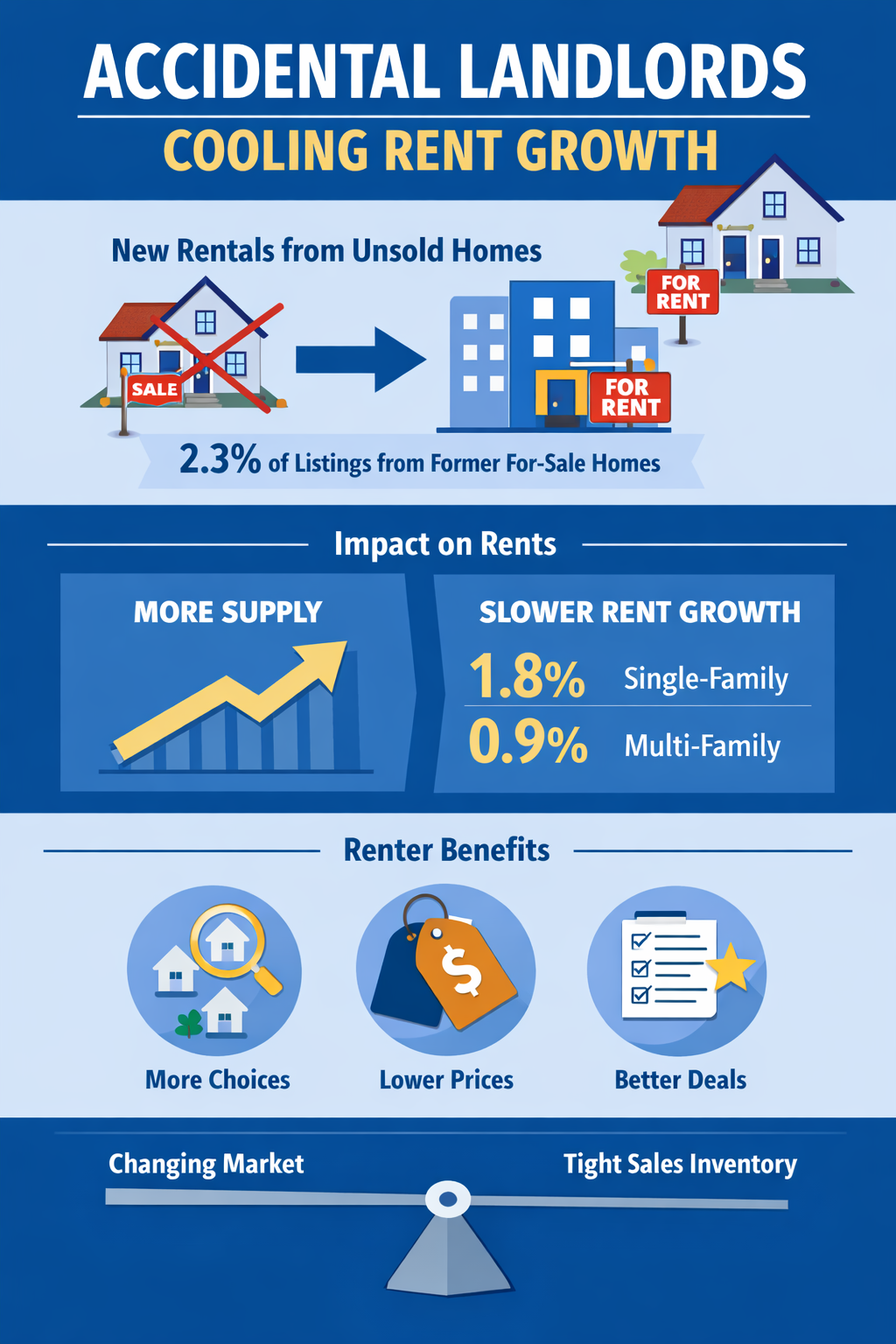
According to recent housing data, a “near-record (and rising) share of homeowners are turning their unsold properties into rentals.” This phenomenon has pushed the share of rental listings coming from former for-sale homes to roughly 2.3%, one of the highest levels recorded in recent years
The underlying driver is a gridlocked housing market. Elevated mortgage rates and shifting buyer leverage have made it harder for sellers to achieve desired prices. Rather than accept a discount, many are choosing to “buy time” by renting. As one analysis summarized, these are homeowners who “couldn’t sell and they’re now renting,” reflecting a pragmatic response to market conditions.
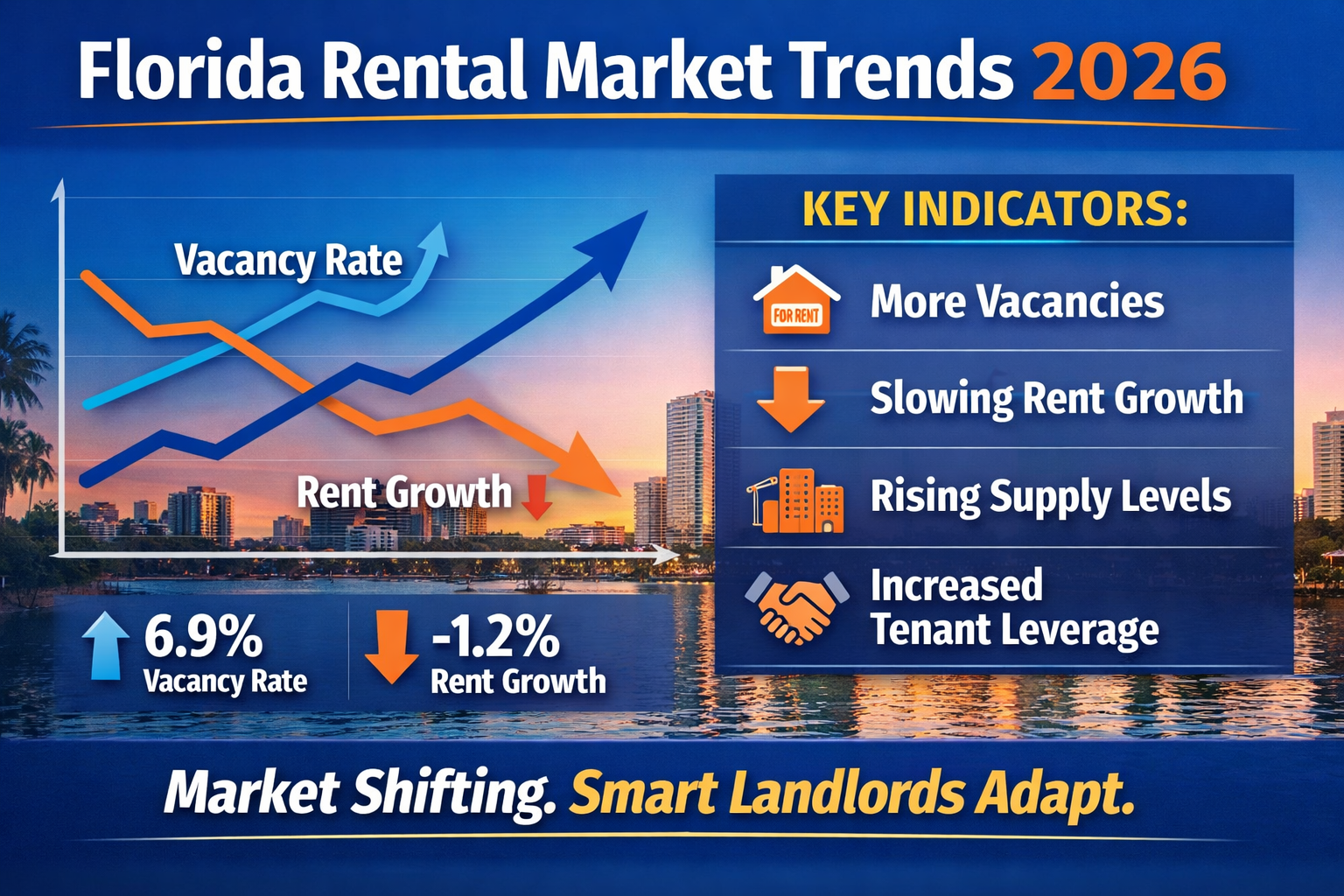
This influx of new rental inventory—particularly single-family homes—is having a clear impact on rents. Increased supply, combined with a wave of new apartment construction, is easing upward pressure on pricing. Zillow forecasts that rent growth will remain modest through 2026, with single-family rents rising just 1.8% and multifamily rents 0.9% by year-end.
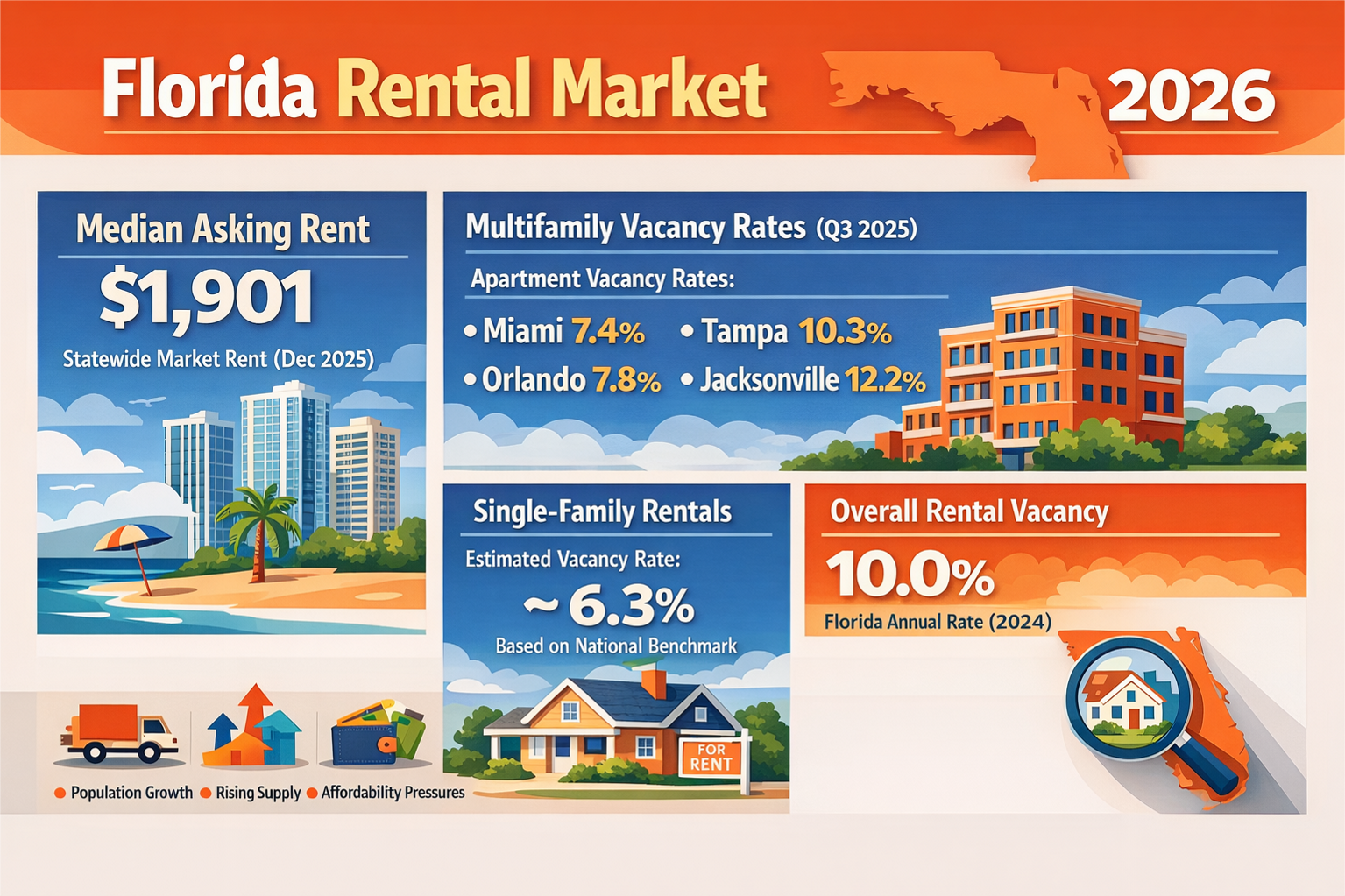
In practical terms, this means renters are gaining leverage. Higher vacancy rates and more choices are forcing landlords to compete more aggressively on price, concessions, and amenities. The market is shifting from the landlord-dominated conditions of recent years toward a more balanced environment.
However, the trend also carries broader implications. While it increases rental supply, it simultaneously removes potential inventory from the for-sale market, as owners delay selling decisions. This dynamic may prolong tight conditions for buyers even as rents stabilize.
Ultimately, the rise of accidental landlords represents a structural adaptation to a changing housing landscape. By expanding rental supply at a critical moment, these reluctant participants are playing a significant role in cooling rent growth—offering relief to tenants while adding a new layer of complexity to the broader real estate market