Why Delaying Eviction Often Backfires for Landlords

It is natural for landlords—especially experienced, conscientious ones—to hesitate before taking formal eviction action. Most rental relationships begin with good intentions, and when a tenant falls behind, many owners look for ways to work things out rather than escalate the situation.


Common reasons for delay include:

  • Tenant hardship stories that appear genuine
  • Acceptance of partial payments in good faith
  • A general discomfort or fear of the court process
  • The belief that the tenant will eventually “catch up”


These instincts are understandable. However, both data and long-term field experience point to a consistent and difficult reality: tenants who fall significantly behind rarely recover without formal intervention.



According to guidance from the Consumer Financial Protection Bureau, prolonged delinquency tends to compound rather than resolve, as tenants must balance rent against other financial obligations. In practice, once a tenant is more than a month or two behind, the likelihood of full recovery diminishes sharply.


In fact, many landlords eventually discover a more uncomfortable truth: some tenants, consciously or not, begin to treat nonpayment as a temporary financial advantage. When rent is not being enforced, funds are often redirected to other pressing needs—credit cards, car payments, or relocation costs. By the time enforcement begins, the tenant may already be financially positioned to move on, leaving the landlord with accumulated losses.


Equally important, delay sends a signal. When rent enforcement appears inconsistent or uncertain, it can unintentionally encourage continued nonpayment. As noted by the National Apartment Association, consistent policy enforcement is one of the most critical factors in maintaining payment discipline across a rental portfolio.


Florida Law Is Built Around Timelines

In Florida, landlord-tenant law is structured with clear procedural timelines. Under Florida Statutes Chapter 83, the eviction process begins with a 3-day notice for nonpayment of rent, followed by court filings if the balance remains unpaid.


These timelines are not arbitrary—they are designed with the expectation that landlords will act promptly when rent is not paid.


When landlords delay, several consequences follow:

  • Court hearing dates are pushed further into the future
  • Possession of the property is delayed
  • The likelihood of recovering unpaid rent decreases


The longer the delay, the greater the financial exposure. Lost rent is rarely recoverable in full, particularly once a tenant vacates or becomes judgment-proof.


Acting promptly is not about being harsh—it is about protecting the asset and maintaining the financial integrity of the rental business.


Early Action Still Leaves Room for Resolution

One of the most common misconceptions among landlords is that filing an eviction immediately ends the possibility of working things out. In reality, the opposite is often true.


Formal action frequently creates clarity and urgency.

  • Tenants who were previously unresponsive often engage once a notice or filing is issued
  • Court deadlines provide a clear framework for resolution
  • Payment plans or move-out agreements become more structured and enforceable


Data from the Urban Institute suggests that many eviction filings do not ultimately result in a completed eviction, but instead lead to negotiated outcomes—payments, stipulations, or voluntary move-outs.


In other words, filing is often the beginning of resolution—not the end of it.


The Bottom Line

Delaying eviction may feel compassionate in the moment, but it often leads to greater financial loss and fewer workable solutions. Prompt, professional action reinforces expectations, preserves options, and aligns with the legal structure already in place.


Landlords can—and should—remain fair and reasonable. But fairness does not require inaction. In most cases, the best outcomes occur when landlords act early, communicate clearly, and allow the process to create the structure needed for resolution.

Councilman Jimmy Peluso proposed legislation to create a database listing rental property and owners
By Paul Howard March 16, 2026
Councilman Jimmy Peluso proposed legislation to create a database listing rental property and owners
By Paul Howard March 1, 2026
Most standard landlord insurance policies were never designed for Airbnb-style turnover.
Recent moves from U.S. financial regulators suggest that traditional banks could soon play a larger
By Paul Howard February 26, 2026
Recent moves from U.S. financial regulators suggest that traditional banks could soon play a larger role in mortgage lending again — potentially making loans easier and more affordable for qualified borrowers.
By Paul Howard February 16, 2026
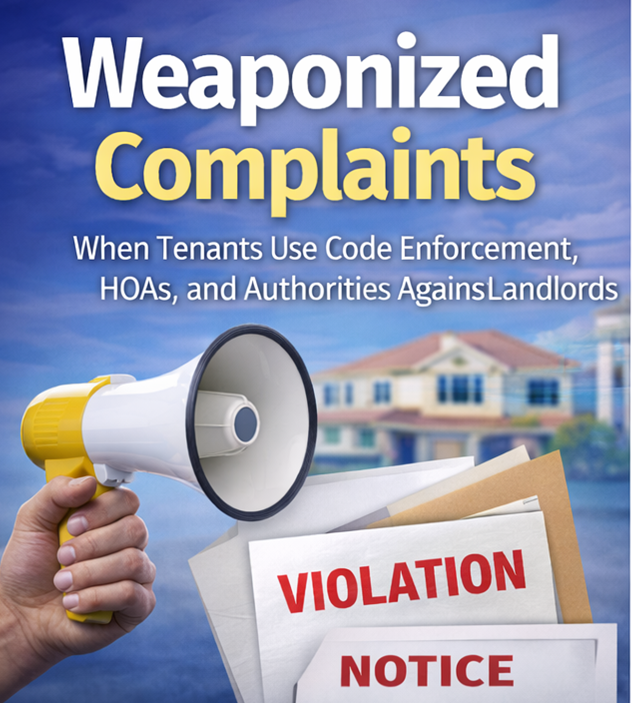
In recent years, many landlords have encountered a troubling trend: tenants using complaints as leverage rather than protection.
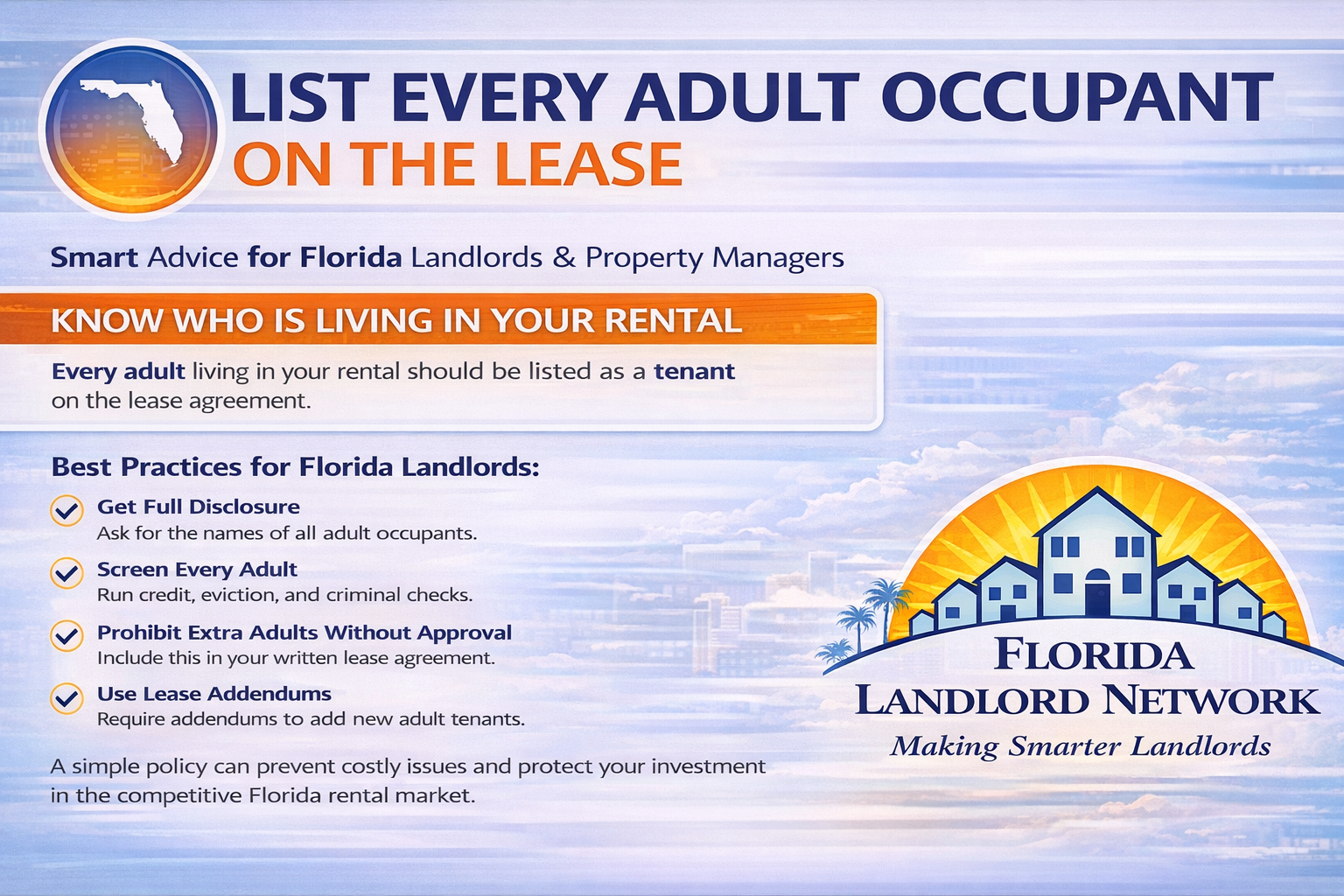
One of the most common — and preventable — mistakes is allowing adults to live in a rental property
By Paul Howard January 17, 2026
One of the most common mistakes is allowing adults to live in a rental property without being formally named on the lease
By Paul Howard January 17, 2026
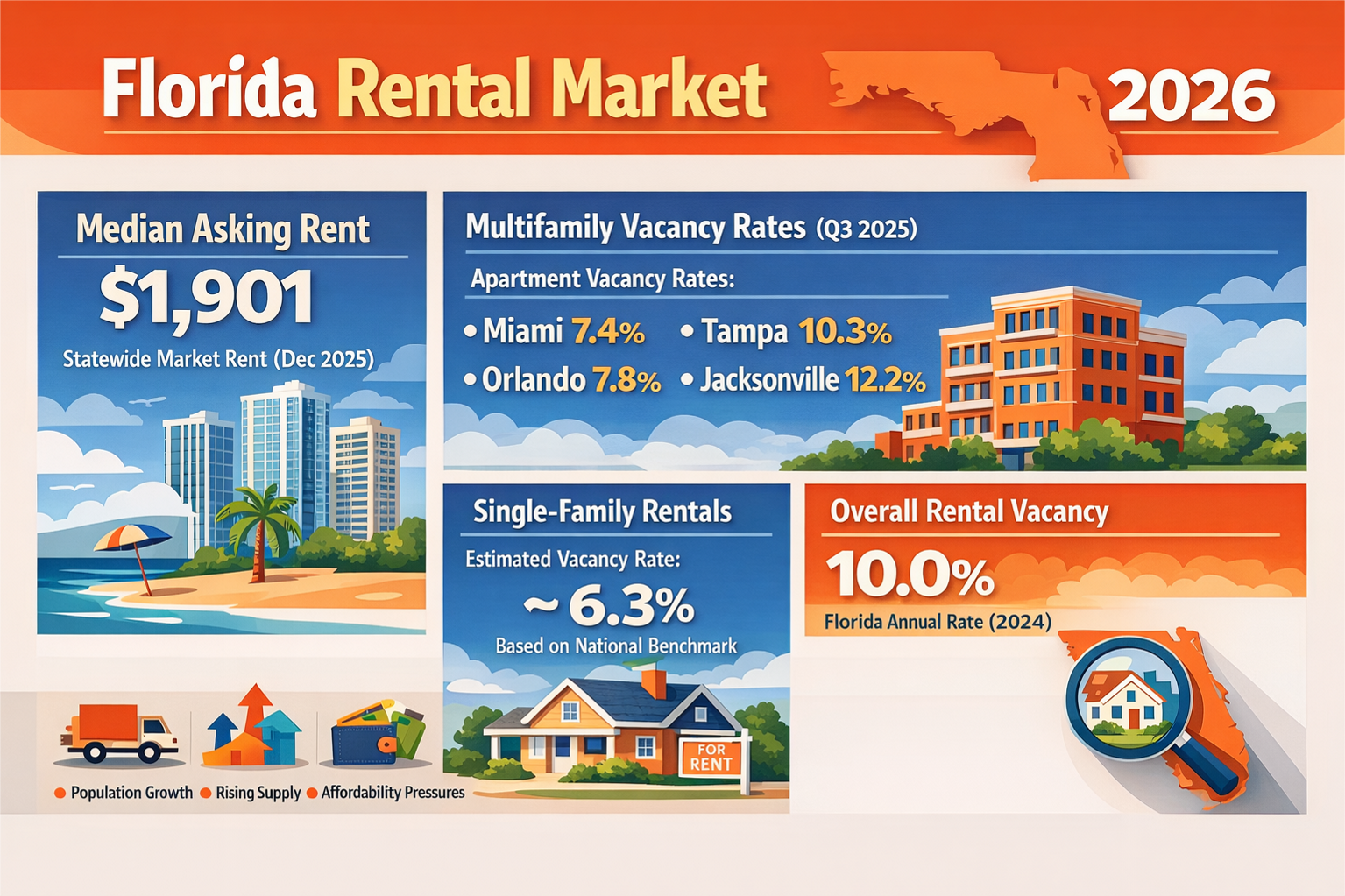
After a period of rapid rent growth and historically low availability, many parts of the state are now moving through a normalization phase.
By Paul Howard December 3, 2025
Florida landlords have been divided on whether accepting Section 8 housing vouchers is a smart business move. But more owners are taking a fresh look at the program.
By Paul Howard December 3, 2025
Insurance remains the single biggest cost issue for Florida landlords in 2025. While still serious, developments suggest the worst may finally be behind us.
By Paul Howard December 3, 2025
Florida saw a massive surge of Wall Street-backed investor activity between 2020 and 2023. But 2024–2025 are telling a different story.
By Paul Howard December 3, 2025
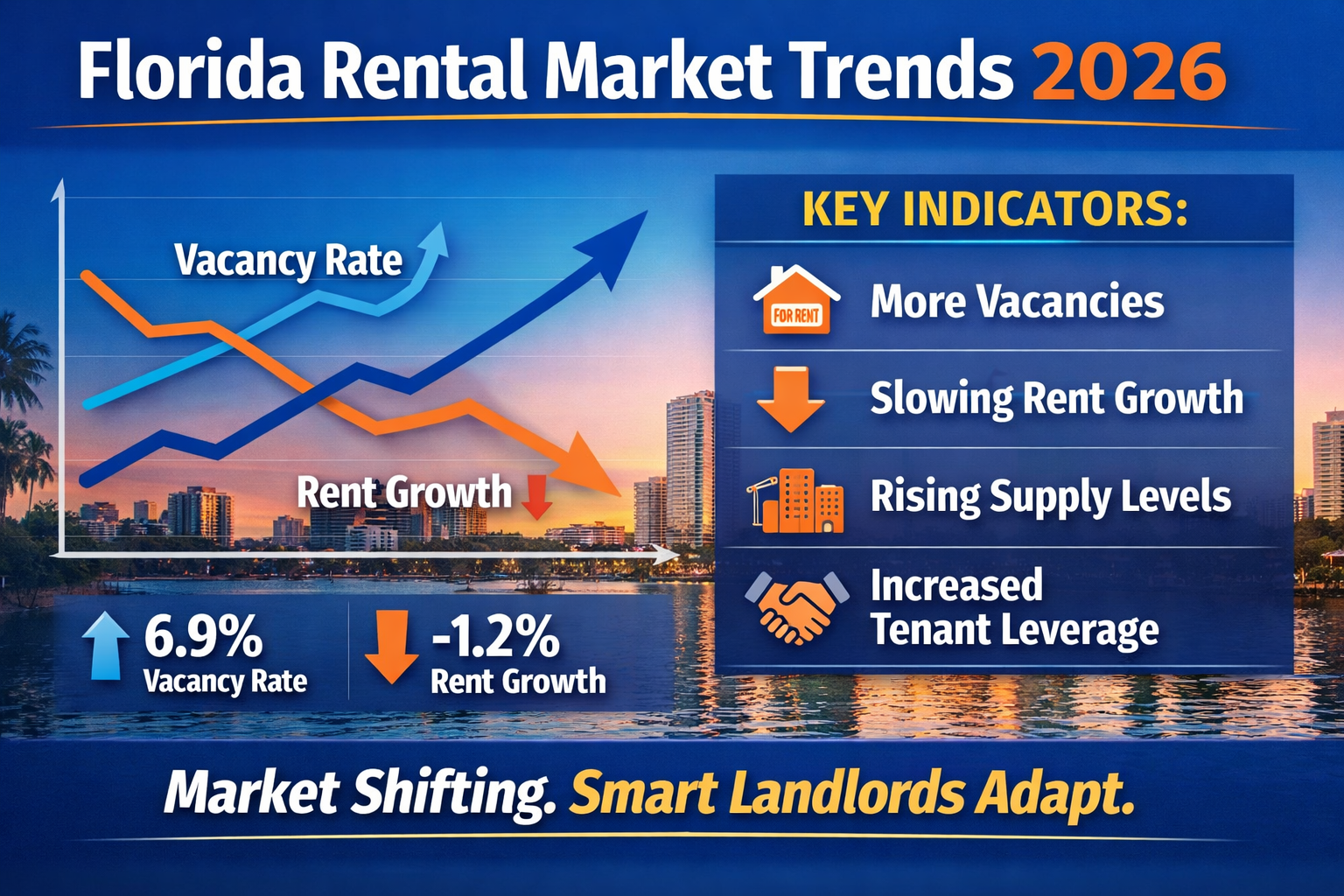
Statewide vacancy rate: about 6.9%, up from 5.8% a year earlier, reflecting softer demand and a lot of new suppl
By Paul Howard September 24, 2025
Many housing providers believe certain situations justify denying an emotional support animal requests. Most of these ideas are myth.
By Paul Howard August 30, 2025
They said the Kansas Supreme Court ruling was a big win for a landlord because his tenant had to pay $21,000 in late fees. I think he lost.
By Paul Howard June 24, 2025
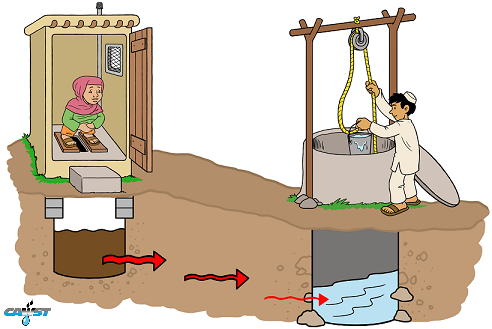
IMPORTANT: If you are a Landlord and you provide water to your tenants via pump and well, here is a page from the website of "America's Largest Injury Law Firm". This looks like a new market for them and that should get your attention!
By Paul Howard May 18, 2025
In 2025, Florida’s home insurance premiums average $5,376 annually for $300,000 in coverage—over double the national average of $2,181—driven by hurricanes, inflation, litigation, and attorney fees.
By Paul Howard May 18, 2025
By leveraging standard depreciation, bonus depreciation, and Section 179 deductions, you can lower taxes and keep more cash for reinvestment.
By Paul Howard May 16, 2025
Several updates to Florida’s landlord-tenant laws have been implemented or proposed by May 2025,
By Paul Howard February 25, 2025
Fair Housing Law Landlord Responsibilities Federal fair housing laws in the United States, primarily governed by the Fair Housing Act ( FHA ) of 1968, aim to ensure equal access to housing and prohibit discrimination in housing-related activities. The FHA applies to most housing types, including rentals, sales, and financing, with limited exceptions (e.g., certain owner-occupied buildings with four or fewer units or single-family homes sold without a broker). Here’s a summary of the key points and landlord responsibilities:
By Paul Howard February 24, 2025
A Stipulation is used to resolve disputes or address issues without going to court. Especially helpful with overdue rent situations.
By Paul Howard February 17, 2025
Many landlords overlook late and partial rent payment. Neither of these practices are good but it could be worse than you think.
By Paul Howard February 3, 2025
Veteran real estate investors almost never sell their rental property. Instead they borrow against the equity, that's tax free cash!
By Paul Howard September 27, 2024
Rental investors should never pay attention to comps because investors do not buy buildings, they buy return on investment (ROI)
By Paul Howard June 29, 2024
The rules governing security deposits for residential leases are primarily found Chapter 83. Here are the key points:
By Paul Howard June 28, 2024
My Tenant Won’t Let Me Enter the Rental Property What Are My Rights?
By Paul Howard May 18, 2024
There are three federal laws that regulate and define what a service dog is: The Americans with Disabilities Act, the Fair Housing Act and the Air Carrier Access Act. The Americans with Disabilities Act (ADA) defines service dogs as “trained to do work or perform tasks for people with disabilities”. Under the ADA, individuals with a disability include someone with a physical or mental health impairment that limits their life.
By Paul Howard March 7, 2024
Tenants who have a bad rental history or a criminal history need a place to live just like everyone else. These characters know they can’t rent from large, well managed apartment communities because they check references. So, who are they looking for? They are looking for a nice, private landlord who thinks he’s is a good judge of character.
By Paul Howard February 23, 2024
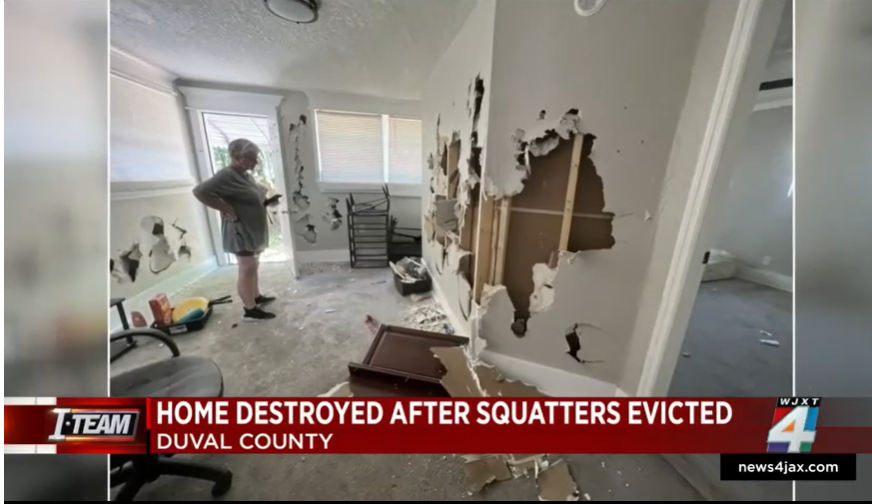
Our eviction business has seen a sizeable increase in the number of squatters moving into empty rental units. The stories are similar. The landlord discovers strangers have taken up residency in their rental home. Naturally, they are angry and worried. Will they become violent? Will they destroy the house? How do I get them out?
By Paul Howard February 13, 2024
Successful landlords know you make money in the rental business when you select your tenant. If you fail to do your due diligence it can cost you thousands.
By Paul Howard December 13, 2023
Landlords are prohibited from requiring tenants to pay rent in excess of what is authorized by HAP contracts. The Landlord may not demand or accept any rent from the tenant in excess of the contracted.
By Paul Howard December 6, 2023
Tenant Screening is without a doubt, one of the most critical steps in the property management process. A thorough and meticulous screening process can mean the difference between a smooth tenancy and a rental nightmare.
By Paul Howard November 10, 2023
Fair Housing: Persons with Disabilities What are Reasonable Accommodations? Source
More Posts