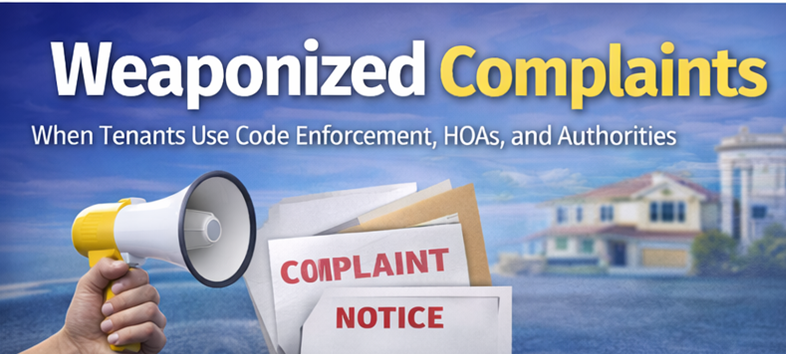
When Tenants Weaponize
Code Enforcement, HOAs, and Complaints
Most Florida landlords understand the importance of maintaining their properties and responding promptly to legitimate repair requests. Code enforcement, housing authorities, and HOAs exist for a reason. But in recent years, many landlords have encountered a troubling trend: tenants using complaints as leverage rather than protection.
This is not about ignoring real safety issues. It’s about recognizing when systems designed to ensure habitability are being strategically weaponized to delay rent, stall eviction, or force concessions.
How Weaponized Complaints Typically Appear
These situations often follow a predictable pattern:
- A tenant falls behind on rent or receives a notice.
- Communication becomes tense or evasive.
- Suddenly, the landlord receives notice of:
- A code enforcement complaint
- An HOA violation
- A housing authority inquiry
- The tenant hints—or directly states—that the complaint will “go away” if the landlord cooperates.
In many cases, the issues cited are minor, exaggerated, or long-standing conditions that were never previously raise

Why This Is Increasing in Florida
Several factors make Florida landlords particularly vulnerable:
- High population growth leading to overburdened enforcement agencies
- Tenant advocacy messaging online, often oversimplified or misleading
- Delays in eviction proceedings, making leverage more effective
- Self-managed properties, where landlords may not have formal documentation systems
Tenants quickly learn that even a minor complaint can trigger inspections, letters, and deadlines—creating stress and expense for owners.
The Cost to Landlords Goes Beyond the Complaint
Even when complaints are unfounded or minor, they can result in:
- Mandatory inspections
- Repair deadlines
- Re-inspections
- Administrative fees
- HOA fines
- Insurance or underwriting questions
- Delays in eviction proceedings
More damaging is the loss of leverage. Once a complaint is active, many landlords hesitate to act at all, fearing retaliation claims—even when rent remains unpaid.
The Difference Between Legitimate Issues and Tactical Complaints
Not every complaint is abusive. Legitimate habitability concerns should always be addressed promptly.
Red flags suggesting a tactical complaint include:
- Issues raised only after rent problems begin
- Vague descriptions without repair requests
- Refusal to allow access for repairs
- Complaints filed simultaneously with eviction notices
- Statements implying negotiation through enforcement
Recognizing the difference allows landlords to respond appropriately without becoming defensive or paralyzed.
Why Over-Accommodation Can Backfire
Many landlords respond by:
- Offering rent concessions
- Delaying notices
- Making unnecessary repairs immediately
- Avoiding communication altogether
Unfortunately, this often reinforces the behavior. Tenants learn that complaints produce results—even when unrelated to actual conditions.
This doesn’t mean landlords should ignore issues. It means responses must be documented, consistent, and professional.
Best Practices to Protect Yourself
Florida landlords can reduce risk by adopting a few key habits:
- Document Everything
Maintenance requests, responses, inspections, and access attempts should be logged in writing. - Respond Promptly—but Formally
Acknowledge complaints and outline steps clearly. Avoid emotional or defensive language. - Maintain Access Records
If tenants deny or delay access, document every attempt. - Separate Maintenance From Rent Enforcement
Handle repairs appropriately—but continue rent enforcement according to law. - Do Not Negotiate Through Complaints
Never tie rent concessions to complaint withdrawal. - Continue Legal Timelines
Properly issued notices and filings should proceed unless advised otherwise by counsel.
When Professional Support Matters
When complaints coincide with non-payment or eviction, landlords often benefit from professional assistance. Experienced eviction services understand how to proceed without triggering retaliation claims or unnecessary delays.
Knowing when to act—and when to hold firm—can prevent a minor issue from becoming a costly, drawn-out problem.
Final Thoughts
Code enforcement, HOAs, and housing authorities play a vital role in protecting tenants. But when those systems are used as bargaining tools, landlords must respond with clarity—not fear.
The goal isn’t confrontation. It’s consistency.
Landlords who document well, act promptly, and separate emotions from operations are far less likely to be derailed by tactical complaints. In today’s Florida rental environment, understanding this dynamic is no longer optional—it’s part of running a resilient rental business