What Landlord Insurance Often Leaves Out for Short-Term Rentals
When you transition a long-term rental to short-term your insurance may fall woefully short
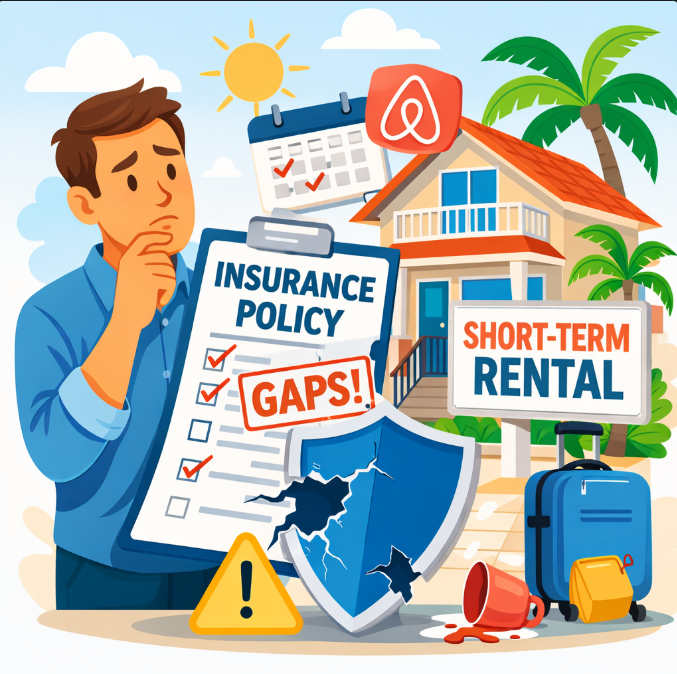
When you transition a property from a long-term rental to a short-term rental(STR) — like listing it on Airbnb or Vrbo — the insurance you once counted on may not provide the protection you think it does. Traditional landlord or dwelling policies are structured for long-term tenants, not for frequent guest turnover and short-duration stays. That difference matters when it comes to what’s actually covered and what isn’t.
Why Standard Landlord Policies May Fall Short
Many typical landlord insurance plans are geared toward long-term rental arrangements (generally leases longer than six or 12 months). Because of that, they often exclude or limit coverage related to the way short-term rentals operate — especially when it comes to guest-caused incidents and business-related risks.
Here are key gaps you need to be aware of:
1. Guest-Related Liability and Injuries
Standard landlord insurance usually includes liability coverage for injuries to named tenants. However, it often excludes liability incidents involving people who stay for only a few days or weeks. Many insurers view short-term rentals as a business activity, and claims arising from guests’ injuries or lawsuits may be denied under a standard policy.
2. Theft and Damage by Short-Term Guests
Landlord policies generally protect the structure itself, not the personal contents you provide for guests. That means if a short-term guest steals furniture, appliances, décor, or other items you’ve put in the space, your policy might not reimburse you.
3. Wear and Tear or Mechanical Breakdowns
Routine mechanical failures — like a broken water heater, refrigerator, or HVAC — typically aren’t covered unless you add a special endorsement. While policies may respond to sudden damage from fire or storm perils, they usually don’t pay for normal wear or equipment breakdowns, which can be a big cost for STR operations with high usage.
4. Pest Infestations
Infestations such as bed bugs are considered preventable or maintenance issues, so they’re excluded from standard coverage. Because pest problems can render a property unusable for guests for days or weeks, an owner may be left covering both the treatment costs and the income lost while the property is uninhabitable.
5. Loss of Rental Income
Landlord insurance may cover loss of rent if your long-term tenant leaves due to a covered peril, but this doesn’t translate well to short-term rental income loss. For example, if a major repair or pest problem forces you to cancel bookings, most traditional policies won’t reimburse the income lost from those reservations.
6. Business Liability and Off-Premises Exposures
Certain amenities common in short-term rentals — such as hot tubs, pools, or recreational equipment — can create liability risks that a standard landlord policy won’t cover. Similarly, liabilities that extend beyond your property lines, like injuries from guest activities off the premises, generally require additional or specialized insurance.
Bottom Line: Short-Term Rentals Are Treated Differently
Because short-term rentals involve frequent turnover, business-style operations, and heightened guest interactions, they
aren’t well served by traditional landlord insurance alone. Many property owners choose to either:
- Add a short-term rental endorsement or rider,
- Obtain a specialized short-term rental policy, or
- Secure commercial property or liability coverage designed for hospitality-style rentals.
Before hosting guests, talk with your insurance agent to understand the limitations of your current policy and explore options that align with how you’re using your property.