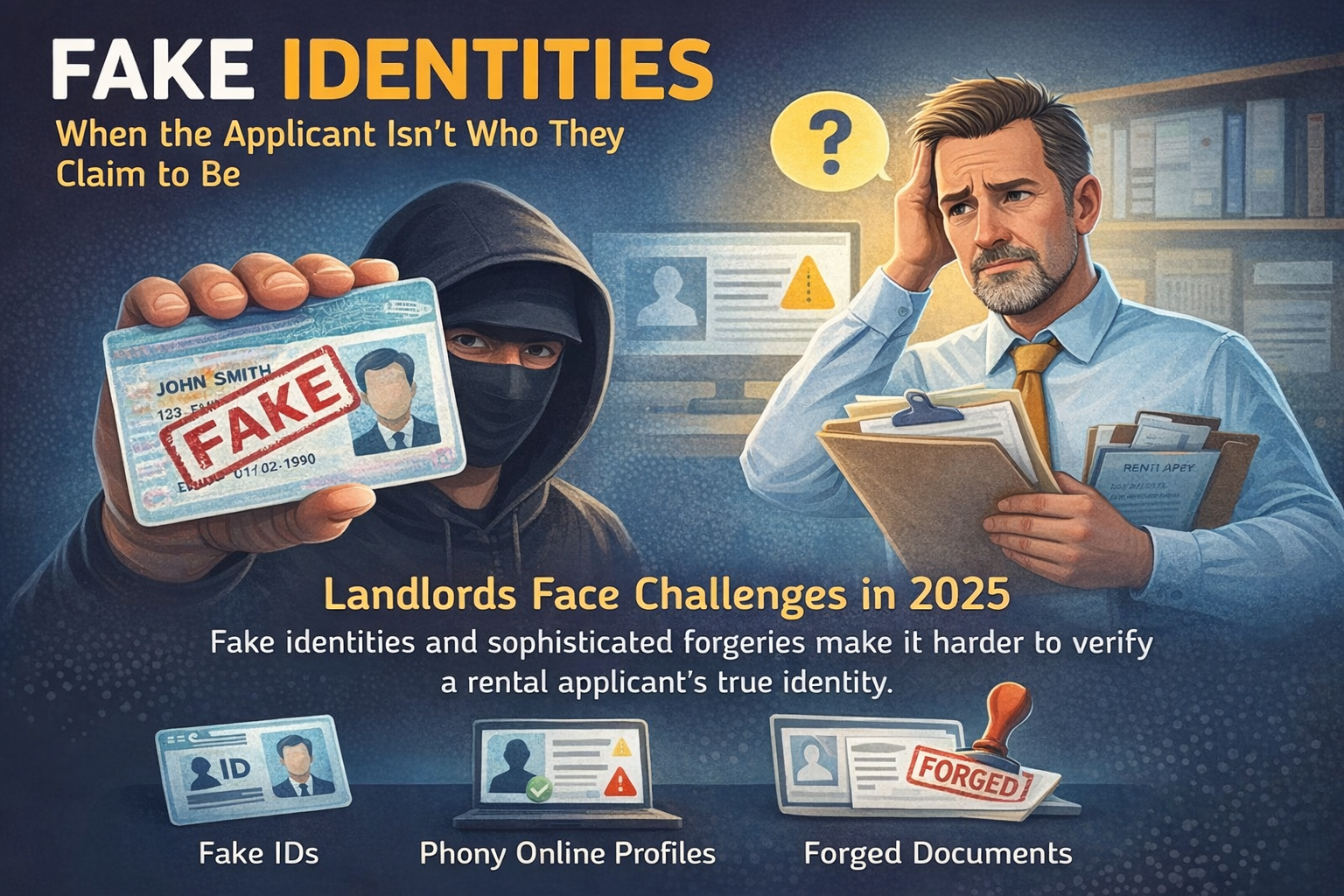
Fake Identities
When the Applicant Isn’t Who They Claim to Be
For decades, verifying a rental applicant’s identity was fairly straightforward. Landlords met the person in person, examined a driver’s license, reviewed a paper application, and verified employment and rental history through direct phone calls. In 2025, that world is gone.
Today’s rental process is overwhelmingly digital, driven by remote leasing platforms and online applications. While this offers convenience, it has unleashed identity fraud on an unprecedented scale. According to recent industry reports, 85% of landlords have encountered rental fraud, up sharply from previous years, with synthetic identities and falsified documents leading the surge.
Fake names, stolen Social Security numbers, synthetic identities (blending real and fabricated data), and "borrowed" identities from acquaintances with strong credit are now commonplace. Many landlords only uncover the deception months later—when rent payments stop and eviction proceedings reveal no traceable real person behind the lease.
How Identity Fraud Happens
Scammers exploit vulnerabilities in digital processes with sophisticated tactics:
- Stolen personal information from massive data breaches, readily available on the dark web.
- Synthetic identities, combining real SSNs or credit elements with fake names, addresses, and details to build seemingly legitimate profiles.
- Borrowed identities from friends or family with good credit, often without their knowledge.
- AI-generated forgeries, including deepfake selfies, manipulated ID photos, and fabricated documents like pay stubs or bank statements.
Automated screening systems often fail to catch these because the identities appear "clean"—especially if unused for prior housing fraud. TransUnion and other reports highlight synthetic fraud as the fastest-growing type, accounting for a significant portion of digital scams.

Why Tech Made It Worse
The shift to remote leasing eliminated in-person meetings, the traditional bulwark against fraud. Applicants now upload scans of IDs, selfies, and supporting documents—many altered using AI tools or "template farms" that mass-produce fakes.
Credit reports can look pristine for new synthetic profiles, and employer references may route to controlled emails or voicemails. With AI advancing rapidly, deepfakes and manipulated media are making even video verifications riskier, though live checks remain a strong defense.
Warning Signs Landlords Miss
Fraudulent applicants often exhibit subtle red flags:
- Reluctance to join live phone or video calls.
- Blurred, inconsistent, or overly perfect ID photos.
- Minor name variations across documents (e.g., middle initial differences).
- Employer or reference contacts leading to personal emails or voicemails.
- Urgency to "move fast," offering higher rent or advance payments.
- "Perfect" applications with no gaps in history but lacking verifiable depth.
What Landlords Should Change
To combat this evolving threat, adopt layered verification:
- Require live video or in-person meetings before final approval—biometric matching of ID photos to real-time selfies is essential.
- Independently verify all contacts, calling employers via official numbers found online, not provided ones.
- Use advanced tools for document forensics, synthetic fraud detection, and biometric checks.
- Cross-reference multiple data points, including SSN traces, address history, and behavioral analysis.
- Be wary of flawless applications—genuine ones often have minor, natural inconsistencies.
- Many property managers now integrate AI-powered fraud detection platforms that flag anomalies automated systems miss.
Bottom Line
Identity fraud in rentals is no longer rare—it's routine and increasingly sophisticated in 2025. Landlords relying solely on basic automated screening are exposing themselves to significant financial and legal risks, including lost income and unrecoverable damages. By prioritizing robust, multi-layer identity verification—including human oversight and live interaction—you can protect your properties and ensure reliable tenants. Staying vigilant isn't optional; it's essential for survival in today's digital rental landscape