HUD Proposes Major Changes to Eviction Rules and Housing Assistance
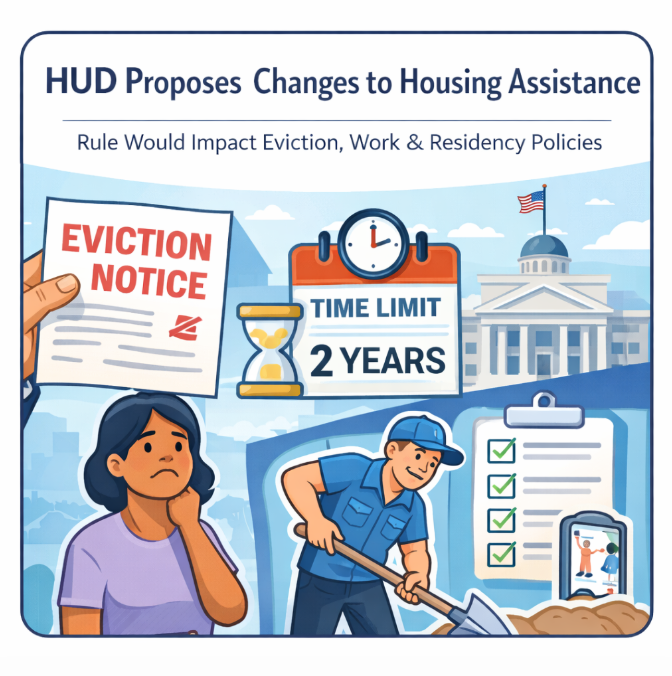
A new proposal from the U.S. Department of Housing and Urban Development (HUD) could significantly change how federally assisted housing programs operate across the country. The rule, released in early March 2026, would give local housing agencies more authority to enforce work requirements, limit how long some tenants receive assistance, and speed up the eviction process in certain situations.
While the proposal is aimed primarily at federally subsidized housing programs, the policy shift could affect millions of households and reshape how public housing is administered nationwide.
Faster Eviction Timelines
One of the most notable elements of the proposal is the rollback of a federal rule that required housing providers to give tenants at least 30 days’ notice before eviction for nonpayment of rent. HUD has moved to remove that requirement, returning eviction timelines to standards determined by state law and local lease agreements.
Because of this change, eviction notices in federally assisted housing programs could be issued with significantly shorter timelines in some areas. In certain cases, lease termination could occur in as little as five days, depending on local regulations and the housing program involved.
Industry groups representing housing providers have generally supported the change, arguing that the previous federal mandate created operational challenges and delayed the ability of landlords and housing agencies to address unpaid rent.

Work Requirements for Housing Assistance
The proposed rule would also allow housing authorities and certain subsidized housing providers to require able-bodied adults to work or participate in qualifying activities in order to remain eligible for housing assistance.
Under the proposal:
- Work requirements could reach up to 40 hours per week for eligible adults.
- The rule would apply to non-elderly, non-disabled residents receiving federal housing assistance.
- Local housing agencies would decide whether to implement the requirements.
The programs potentially affected include:
- Public Housing
- Housing Choice Vouchers (Section 8)
- Project-Based Vouchers
- Project-Based Rental Assistance
HUD officials say the intent is to encourage self-sufficiency and ensure housing assistance functions as a temporary support rather than a permanent benefit.
Term Limits on Housing Assistance
Another major element of the proposal involves time limits on how long some households can receive federally subsidized housing.
The rule would allow housing providers to establish residency limits, potentially as short as two years for certain tenants who are able to work and do not qualify for disability or elderly exemptions.
However, these limits would not be mandatory. Local housing authorities and property owners would have the option to adopt the policy based on local conditions and administrative capacity.
Public Comment Period
Because the rule is still in the proposal stage, HUD is accepting public comments before making a final decision. The comment period is open until May 1, 2026.
During this time, housing authorities, property owners, advocacy groups, and members of the public can submit feedback that may influence the final version of the regulation.
A Significant Shift in Housing Policy
If implemented, these changes would represent one of the most significant shifts in federal housing policy in recent years.
Supporters argue that the new rules could:
- Reduce long-term dependency on housing assistance
- Give local housing providers more flexibility
- Allow faster action when tenants fail to pay rent
Critics, however, warn that stricter requirements and shorter eviction timelines could make it more difficult for vulnerable households to maintain stable housing.
What It Means for Landlords
Although these rules apply primarily to federally assisted housing programs, they may influence how affordable housing is managed nationwide.
For landlords who participate in programs such as Section 8 or other HUD-assisted housing initiatives, the changes could eventually affect tenant eligibility standards, lease enforcement policies, and administrative procedures.
As the rulemaking process moves forward, housing providers and property owners will be watching closely to see how the final policy is structured and how widely it may be implemented.